Hai Phong is often treated simply as the route to Cat Ba and Lan Ha Bay, but Vietnam’s historic port city is worth a closer look. Its compact centre combines old civic architecture, temples and communal houses with one of Northern Vietnam’s liveliest food scenes, while Do Son, Hon Dau and Cat Ba bring very different coastal experiences into the same journey.
Known as the City of Red Flamboyant Flowers, Hai Phong still feels first and foremost like a working port and commercial city. Broad streets, local cafés, neighbourhood food stops, the central flower gardens and the relationship with the sea are as important to its character as the individual monuments.
There is also an important administrative change to understand when reading older travel guides. Since 1 July 2025, the former Hai Phong municipality and Hai Duong Province have been merged into a much larger Hai Phong. This guide deliberately focuses on the historic port-city centre and the coastal corridor towards Do Son, Cat Ba and Lan Ha Bay, which remain the most relevant areas for a classic Northern Vietnam journey.

Is Hai Phong worth visiting?
Yes, particularly if you enjoy regional food, local city life, architecture or want to add a different urban experience between Hanoi and the coast.
Hai Phong does not need several days of sightseeing. A half-day can introduce the central streets, Opera House area and local food. One full day allows a more relaxed visit with Du Hang Pagoda and Hang Kenh Communal House. With more time, you can continue towards Do Son or make the city part of a longer route to Cat Ba and Lan Ha Bay.
| If you are interested in… | Focus on… | Time to consider |
|---|---|---|
| Food & local city life | Central Hai Phong | Half-day to 1 day |
| Architecture & heritage | Opera House area, Du Hang Pagoda, Hang Kenh Communal House | 1 day |
| Coast & maritime history | Do Son, Hon Dau, K15 historical site | Half-day to 1 day |
| Nature, cruising & kayaking | Cat Ba & Lan Ha Bay | At least 1 night |
1. Start in the historic centre of Hai Phong
The centre is the best place to understand Hai Phong before heading towards the coast. Around the central flower gardens, Opera House and nearby streets, the city’s commercial history remains visible in its urban layout and civic architecture.
The Hai Phong Opera House is one of the city’s most recognisable landmarks. Rather than visiting it in isolation, walk through the surrounding gardens and streets, where older public buildings sit alongside cafés, restaurants and everyday city life.
Since August 2026, the central garden strip and Opera House area have also hosted a weekend pedestrian and night-food programme, adding another reason to explore this part of Hai Phong in the evening when it is operating.
The statue of General Le Chan, traditionally associated with the foundation of the ancient settlement of An Bien, is another important landmark in the central area and a useful introduction to the city’s historical identity.

Hai Phong works particularly well when you do not try to turn every building into a formal sightseeing stop. The pleasure is in moving between architecture, cafés, local food and the central public spaces rather than following a long monument checklist.
2. Make food part of the visit, not an afterthought
Hai Phong’s food scene has become one of the clearest reasons to visit the city in its own right. The local tourism sector has actively promoted the Hai Phong Food Tour, and for international travellers it is an easy way to experience the city beyond its architecture and heritage sites.
Three dishes provide a good starting point:
- Bánh đa cua: reddish-brown rice noodles served with a crab-based broth and a combination of local toppings.
- Nem cua bể: Hai Phong’s distinctive square crab spring rolls.
- Bánh mì cay: small baguettes filled with pâté and traditionally eaten with a spicy chilli sauce.
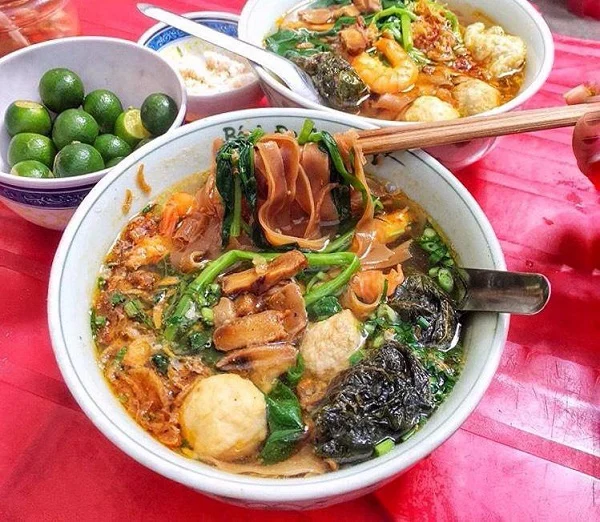
The point is not to sit down for one enormous meal. A Hai Phong food tour works better when several dishes are tried at different small addresses over a few hours.
If food is one of your priorities in Vietnam, it is worth giving Hai Phong a proper lunch or evening rather than eating quickly on the way towards Cat Ba.
Good for: street-food lovers and travellers interested in regional Vietnamese cuisine.
Allow: several hours so you can try more than one speciality without rushing.
3. Du Hang Pagoda and Hang Kenh Communal House
Two heritage sites south of the central area reveal a much older Hai Phong than the port city and its colonial-era civic buildings.
Du Hang Pagoda
Du Hang Pagoda, also known as Phuc Lam Pagoda, traces its origins to the Early Le period in the late 10th century. The complex developed over subsequent centuries and remains one of Hai Phong’s longstanding Buddhist sites.
Its value lies not only in its age. The pagoda preserves Buddhist statues, bells and religious objects within a traditional temple complex that feels surprisingly calm considering its urban setting.
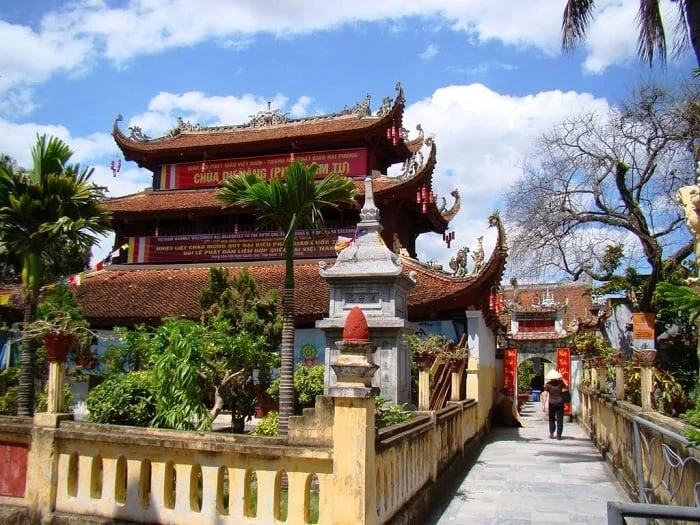
For travellers who have already visited Hanoi’s better-known temples, Du Hang adds useful regional context without requiring a major detour.
Hang Kenh Communal House
Hang Kenh Communal House is one of Hai Phong’s notable examples of traditional northern Vietnamese communal architecture. The present structure dates from the early 18th century and was subsequently restored and enlarged.
The timber building is particularly known for its elaborate carving. Official local heritage information describes more than one hundred carved panels containing nearly 400 dragon figures, together with floral, cloud and animal motifs.
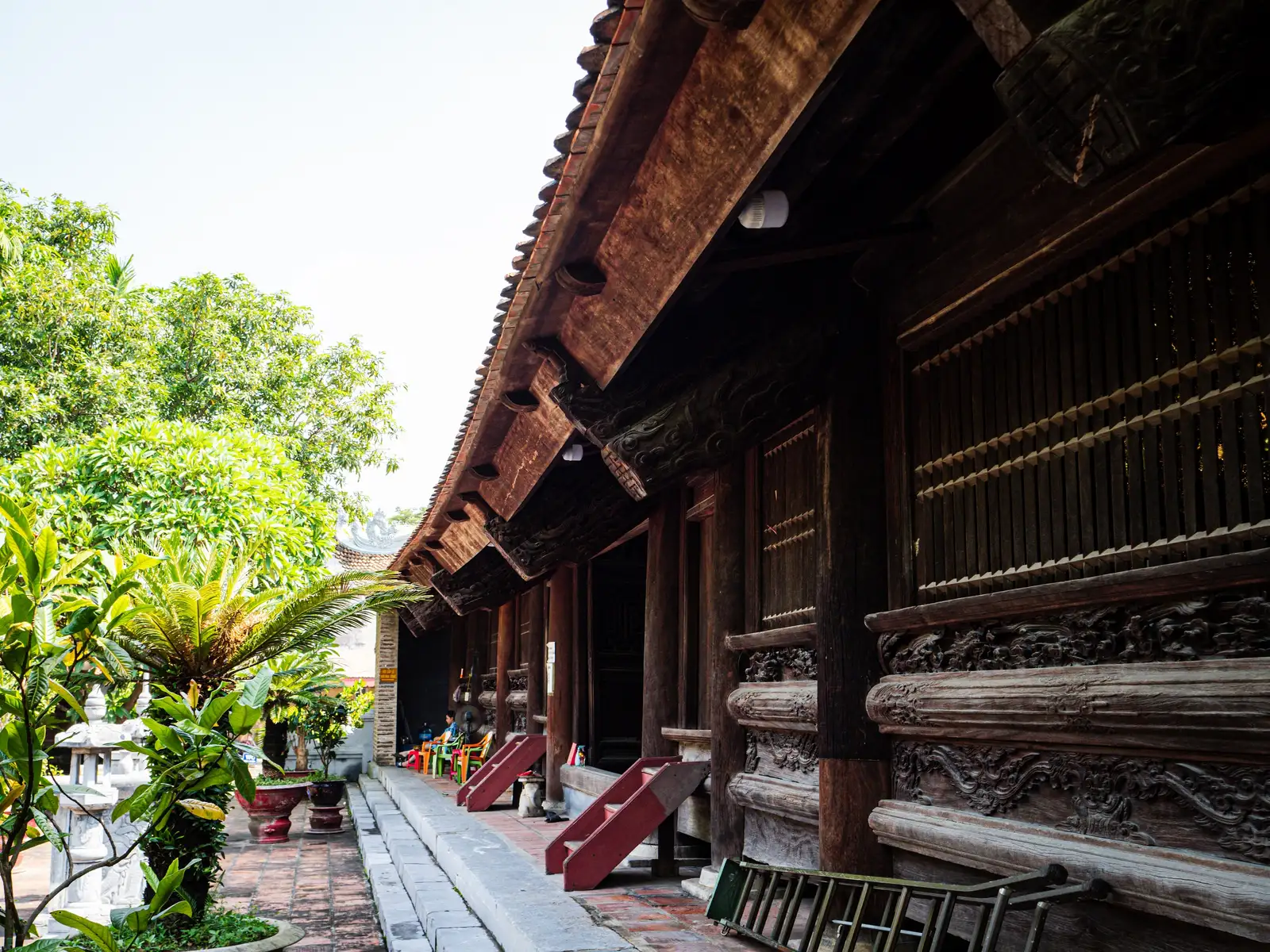
The communal house is dedicated to Ngo Quyen, whose victory on the Bach Dang River in 938 ended a long period of Chinese domination and holds an important place in Vietnamese history.
For visitors unfamiliar with the Vietnamese communal house, Hang Kenh is especially useful because it shows that these buildings were historically more than places of worship: they were also centres of village ceremony and community life.
4. Do Son, Hon Dau and the maritime side of Hai Phong
Do Son has been associated with seaside holidays for generations, but international travellers should choose it for the right reasons.
If your priority is clear tropical water and an island-beach atmosphere, Cat Ba or destinations farther south are generally more suitable. Do Son works better as a local coastal and cultural excursion, combining the sea, wooded hills, maritime history and places closely connected with Hai Phong’s own identity.
Hon Dau Island
Just off the Do Son peninsula, Hon Dau is a small wooded island associated with navigation and local maritime traditions. Its lighthouse, old trees, temple and coastal setting create a quieter contrast to the more developed parts of Do Son.

The attraction is atmosphere rather than resort facilities: a short crossing, greenery, sea views and a sense of Hai Phong’s longstanding relationship with the Gulf of Tonkin.
K15 Wharf: where the Ho Chi Minh Trail at Sea began
K15 Wharf at Do Son marks the starting point of the strategic maritime supply route known as the Ho Chi Minh Trail at Sea.
The K15 site forms part of a Special National Historical Relic. A major project to restore and enhance the complex was completed and officially inaugurated in May 2026, giving the site a stronger role as a place of remembrance and historical interpretation for visitors.

For travellers interested in modern Vietnamese history, K15 gives a Do Son excursion considerably more depth than treating the peninsula simply as a beach stop.
5. Cat Ba and Lan Ha Bay: the nature side of Hai Phong
For international travellers, Cat Ba is the most important natural destination associated with Hai Phong. The island combines limestone mountains, forest, small beaches and access to the sheltered waters of Lan Ha Bay.
Cat Ba has been a UNESCO World Biosphere Reserve since 2004 and was revalidated in 2025. In 2023, the Cat Ba Archipelago also became part of the expanded UNESCO World Heritage property Ha Long Bay-Cat Ba Archipelago.

This matters when planning the route because Cat Ba should not simply be treated as a beach extension to Hai Phong. It is a substantial destination in its own right, with possibilities for cruising, kayaking, cycling, hiking in Cat Ba National Park and exploring Lan Ha Bay.
If Cat Ba and Lan Ha Bay are important to your trip, allow at least an overnight stay rather than trying to squeeze the island into a rushed excursion from the city.
Lan Ha Bay or Ha Long Bay?
Lan Ha Bay and Ha Long Bay form part of the same wider limestone seascape, but the practical cruise experience can differ according to embarkation point, route, vessel and programme.
If you are still deciding where to cruise, see our Ha Long Bay vs Bai Tu Long Bay vs Lan Ha Bay comparison before choosing the route.
If you are already planning an overnight cruise, avoid adding several bay stops simply to see similar limestone scenery twice. It is usually better to choose one bay experience carefully and use the remaining time for Hanoi, Ninh Binh, the mountains or another region of Vietnam.
Cat Ba and Lan Ha Bay in Tonkin Travel itineraries
Cat Ba and Lan Ha Bay are also part of real Tonkin Travel routes, which helps show how the destination can fit into a wider private journey rather than standing alone.
Our Vietnam Off the Beaten Track Tour – 14 Days follows a practical sequence from Hanoi to Cat Ba and an overnight Lan Ha Bay cruise before continuing to Ninh Binh. The bay programme includes swimming and kayaking while keeping transfers moving logically through Northern Vietnam.
For travellers wanting a longer nature-focused route, the Vietnam Cultural Heritage & Wild Nature Trip also includes an overnight Lan Ha Bay cruise, kayaking and time around Viet Hai on Cat Ba before the journey continues south.
These programmes are useful examples of how Cat Ba and Lan Ha Bay can sit naturally between other destinations without unnecessary backtracking.
6. Why is Hai Phong called the City of Red Flamboyant Flowers?
The red flamboyant tree has become one of Hai Phong’s most recognisable symbols. In late spring and early summer, its bright red flowers appear along streets and public spaces throughout the city, reinforcing Hai Phong’s long-standing nickname.
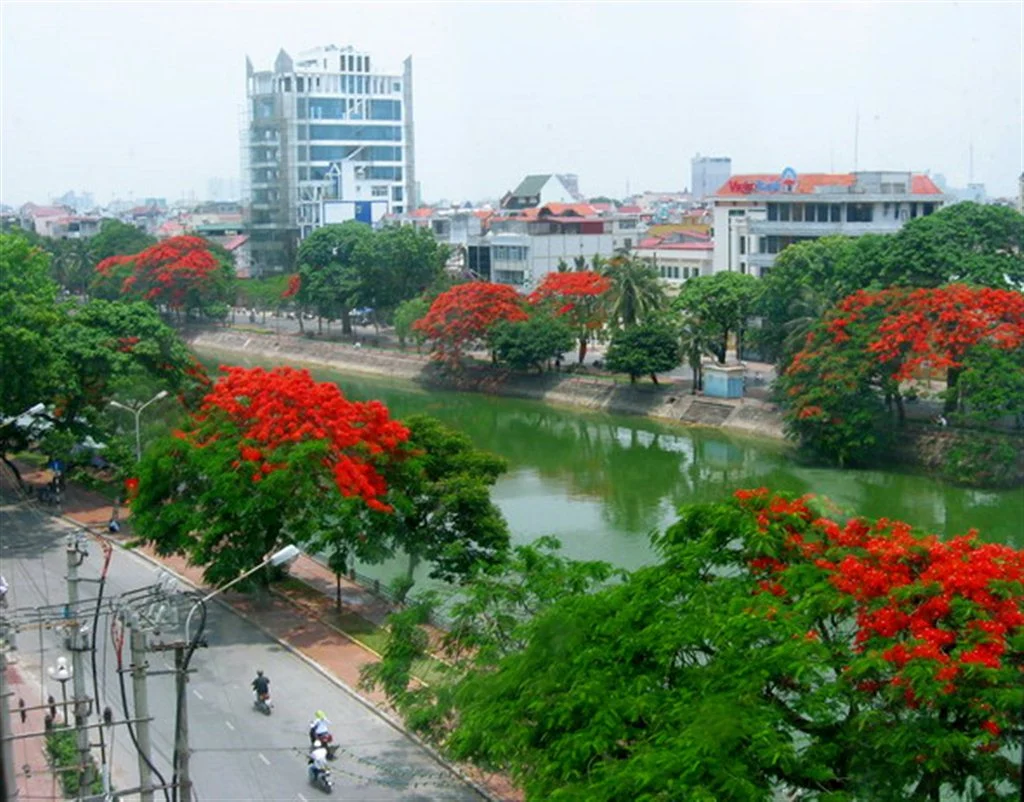
That identity is celebrated through the annual Red Flamboyant Festival, one of Hai Phong’s major cultural and tourism events. The 2026 festival again brought together performances, cultural activities and celebrations during May.
If you visit around May, the flowers add real colour to the city. The trade-off is warmer weather, so walking is usually more comfortable earlier in the morning or later in the afternoon.
How should you fit Hai Phong into a Northern Vietnam itinerary?
Hai Phong works best when it solves a real itinerary need rather than being added simply because it lies on the map.
| Your priority | A practical approach |
|---|---|
| Food & port-city atmosphere | Add one day or one night in central Hai Phong |
| Heritage & local culture | Combine the centre with Du Hang Pagoda and Hang Kenh Communal House |
| Coast & maritime history | Add Do Son, Hon Dau and K15 |
| Nature & overnight cruise | Continue to Cat Ba and Lan Ha Bay |
| A short first trip to Vietnam | Prioritise either Hai Phong city or Cat Ba rather than trying to cover everything |
A particularly logical northern sequence is Hanoi → Hai Phong / Cat Ba → Lan Ha Bay → Ninh Binh. This keeps the journey moving in one direction while combining city life, limestone seascapes and countryside rather than repeating similar experiences.
For a broader view of how Northern Vietnam can fit into a longer countrywide journey, see our 3-week Vietnam itinerary guide.
If your schedule is already tight, Hai Phong can remain mainly a transit point. But if you have an extra day and enjoy food, architecture and cities with relatively little international tourism, the historic centre is worth slowing down for.
When is a good time to visit Hai Phong?
The most suitable period depends on whether your priority is city exploration, the red flamboyant season or the coast.
| Period | Why consider it | What to keep in mind |
|---|---|---|
| Spring | Comfortable for city and heritage sightseeing | Conditions can vary between cool and humid days |
| May | Red flamboyant flowers and major city celebrations | Temperatures are already rising |
| Summer | Popular for Do Son, Cat Ba and coastal trips | Heat, rainfall and marine conditions can affect outdoor plans |
| Autumn | Often comfortable for combining the city and outdoor activities | Check current marine conditions if cruising or kayaking |
For Cat Ba and Lan Ha Bay, current weather and sea conditions matter more than a generic monthly climate chart. If the cruise is one of the priorities of your journey, build some flexibility into the surrounding programme.
Frequently asked questions about Hai Phong
Is Hai Phong only a gateway to Cat Ba?
No. Cat Ba is the best-known international destination connected with Hai Phong, but the city itself has a distinctive food culture, civic architecture, Buddhist and communal heritage, and a strong port-city identity. A day or overnight stop can be worthwhile when those interests fit your trip.
How long should I spend in Hai Phong?
Half a day can cover the central area and a few food stops. One full day allows a more relaxed city visit with Du Hang Pagoda and Hang Kenh Communal House. Add another half-day or day for Do Son. Cat Ba and Lan Ha Bay should normally be planned separately with at least an overnight stay.
What food should I try in Hai Phong?
Bánh đa cua, nem cua bể and bánh mì cay are three useful starting points. The city is particularly suited to an informal food tour where you try several small dishes at different addresses rather than committing to one long restaurant meal.
Should I visit Do Son or Cat Ba?
Choose Do Son for a shorter coastal excursion with local seaside culture, Hon Dau and modern maritime history. Choose Cat Ba when nature, cruising, kayaking, hiking and the limestone landscapes of Lan Ha Bay are a major part of your trip. They serve different purposes.
Should I choose Lan Ha Bay or Ha Long Bay?
Both belong to the wider UNESCO-listed limestone seascape, but cruise routes, embarkation points and onboard programmes vary. Choose according to the actual vessel and itinerary rather than the destination name alone. Our bay comparison guide explains the practical differences.
Can Hai Phong be included in a private Northern Vietnam itinerary?
Yes. Hai Phong can work as a food and city stop, a base for a Do Son excursion, or the transition towards Cat Ba and Lan Ha Bay. The useful question is not whether Hai Phong can be added, but whether the city adds something different to the rest of your route.
Tell us whether your priority is the port city, local food, Cat Ba, an overnight Lan Ha Bay cruise or a wider Northern Vietnam journey. We can then place Hai Phong where it makes geographical sense instead of adding unnecessary transfers or repeating similar experiences.
Place of interest
What clients say about us