Vietnam’s best markets are not all the same kind of place. Some are working wholesale markets that are busiest before sunrise. Others are weekly mountain gatherings, evening food streets, historic city markets or floating trading areas in the Mekong Delta. The right market to visit depends on where you are travelling — and what you actually want to understand.
A good market visit is therefore about more than shopping. It may show you how vegetables arrive in Hanoi before breakfast, how mountain communities trade on a weekly market day, how Hue’s food culture comes together in one place, or how commerce developed around the waterways of the Mekong Delta.
Here are ten markets worth considering on a Vietnam journey, together with the reason to visit each one and the time of day when the market itself — rather than simply its souvenir stalls — is most interesting.
Which Vietnam market should you visit?
| Market | Where | Best for | When to go |
|---|---|---|---|
| Bac Ha Market | Northern Vietnam | Weekly mountain-market life | Early Sunday morning |
| Dong Xuan Market | Hanoi | Historic city commerce and Old Quarter food | Morning or daytime |
| Quang Ba Flower Market | Hanoi | Pre-dawn wholesale activity | Around 4–5:30am |
| Dong Ba Market | Hue | Hue food and everyday city life | Morning to lunch |
| Hoi An Night Market | Hoi An | Lanterns, evening atmosphere and souvenirs | After sunset |
| Da Lat Night Market | Da Lat | Cool-weather street food | Evening |
| Ben Thanh Market | Ho Chi Minh City | Iconic market architecture and first-time visitors | Daytime |
| Binh Tay Market | Ho Chi Minh City | Cho Lon and wholesale trade | Morning |
| Cai Rang Floating Market | Can Tho | Mekong river trading culture | Around sunrise |
| Phu Quoc Night Market | Phu Quoc | Seafood and evening browsing | Evening |
1. Bac Ha Market — a weekly gathering in the northern mountains
Bac Ha is very different from Vietnam’s urban markets because it follows a weekly rhythm. The main market takes place on Sunday and brings together people from Bac Ha and surrounding mountain communities to buy food, agricultural produce, household goods, clothing and other everyday necessities.
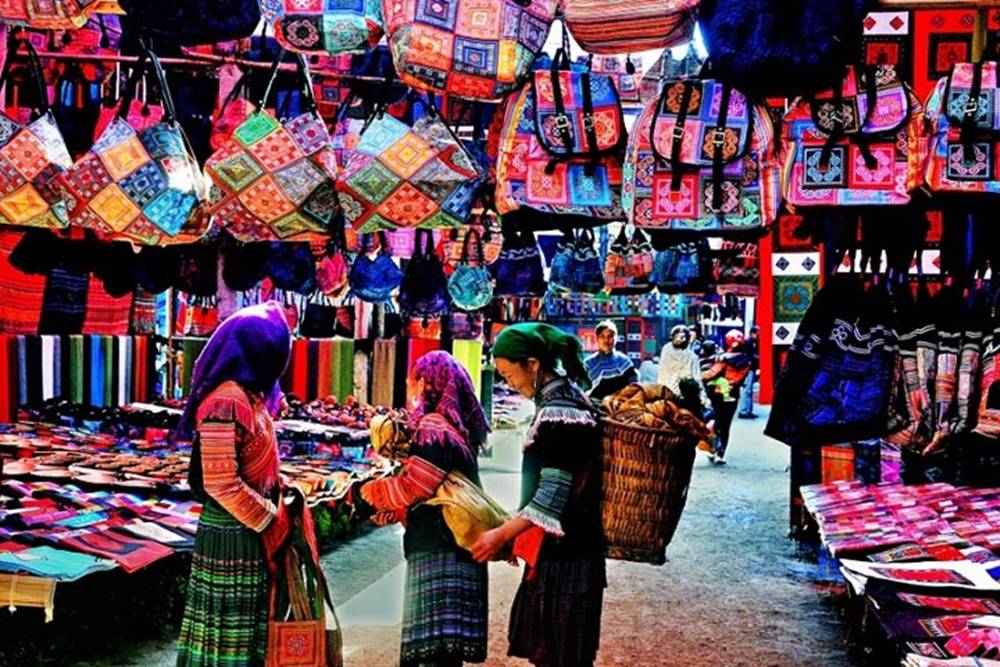
Hmong, Tay, Nung, Dao, Phu La and other communities from the region may all be present, but the market should not be approached as a parade of traditional clothing for visitors. It is first a commercial and social meeting place.
Arrive early enough to see the market functioning before the largest visitor groups arrive. Agricultural products, food stalls and ordinary household trade are often more revealing than the souvenir section.
Important 2026 update: the buffalo market is no longer part of the Sunday visit
Older guides often describe buffalo trading as part of the Sunday market. Bac Ha’s market management changed this arrangement in 2025: the dedicated buffalo market now takes place on Saturday. If livestock trading is important to you, confirm the current schedule locally and plan the weekend accordingly.
Bac Ha also works better as part of a northern mountain itinerary than as a rushed excursion simply to photograph the market. Staying nearby on Saturday night makes an early Sunday visit much easier.
2. Dong Xuan Market — Hanoi’s historic wholesale market
Dong Xuan sits at the northern edge of Hanoi’s Old Quarter and remains one of the capital’s major covered markets. The present market traces its history to the late nineteenth century and today combines wholesale and retail activity across clothing, fabrics, household goods, dried food and many other products.
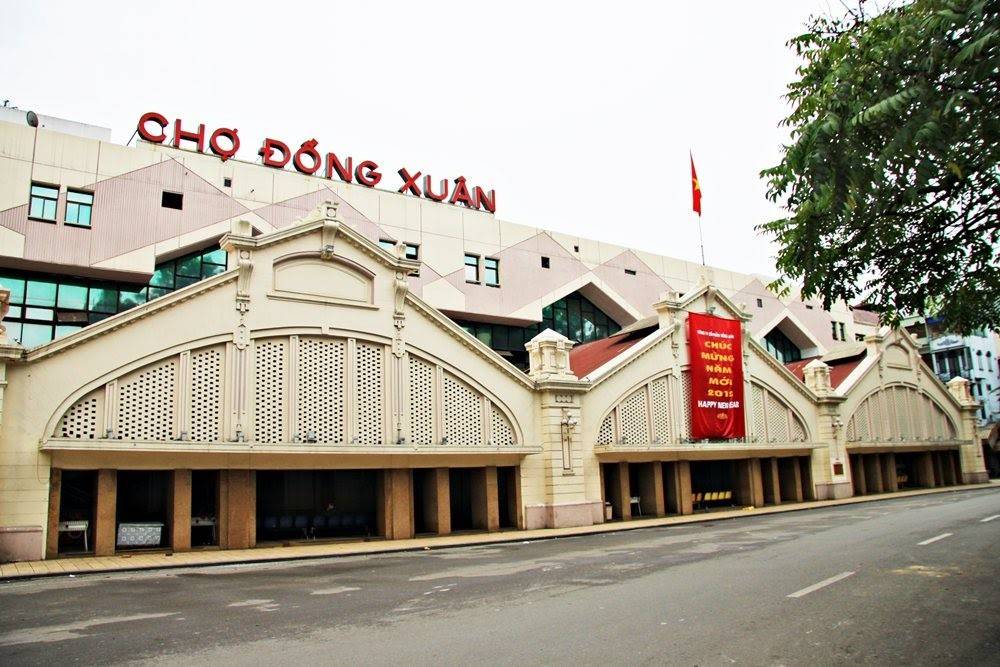
For a visitor, the building is only part of the experience. The surrounding lanes and food stalls extend the commercial life of the market into the Old Quarter.
This is not the best place to apply a rule such as “always offer half the first price”. Some stalls serve wholesale customers, some have effectively fixed prices and others expect negotiation. Ask first, compare where appropriate and bargain only where the transaction is clearly negotiable.
3. Quang Ba Flower Market — Hanoi before sunrise
Quang Ba is not primarily a market created for sightseeing. It is a wholesale flower market on Au Co Street in Tay Ho, active during the hours when most of Hanoi is still asleep.
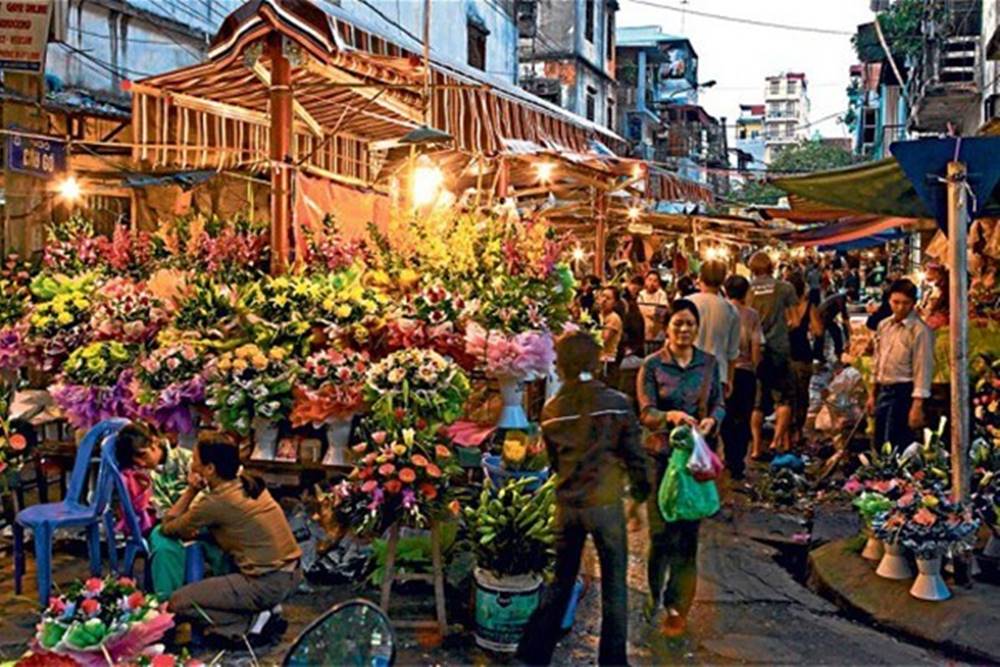
Growers and wholesalers bring flowers into the city during the night, and retailers collect them for shops and street sales around Hanoi. Roses, lilies, chrysanthemums and seasonal flowers move rapidly through the market, with activity intensifying around Tết.
For travellers, the most interesting window is generally in the pre-dawn hours — late enough for the market to be active, but before the working wholesale rhythm begins to disappear into the new day.
Photography requires particular awareness here. Sellers are moving stock and vehicles through narrow working spaces. Stay out of loading routes and ask before taking close portraits.
4. Dong Ba Market — the market to visit in Hue
If food is one of the reasons you are travelling to Hue, Dong Ba deserves more attention than a souvenir-only stop. Beside the Perfume River and close to the historic centre, the market brings together produce, dried ingredients, prepared food, clothing and goods used in everyday life.
Hue’s cuisine is highly regional, and the market is a useful place to see many of its ingredients and snacks in context. Depending on the stalls operating when you visit, you may encounter dishes and products associated with the city such as bánh bèo, bánh khoái, chè, shrimp-based condiments and local sweets.
A morning visit gives you more of the working-market atmosphere. Later in the day, the visit becomes easier to combine with sightseeing around the river and Imperial City.
5. Hoi An Night Market — evening atmosphere rather than daily commerce
Hoi An’s best-known night market runs along Nguyen Hoang Street, across the river from the core of the Ancient Town. This is a visitor-oriented evening market rather than a traditional morning food market.
The draw is the atmosphere: illuminated lantern stalls, small souvenirs, snacks and the wider evening scene along the Hoai River. Current local tourism information lists the Nguyen Hoang market as operating in the evening, roughly from late afternoon until around 11pm.
It is worth visiting if you are already staying in Hoi An, but do not confuse it with a working craft village. Lanterns, ceramics and textiles sold at a night-market stall are retail products; if you want to understand how something is made, a separate visit to a verified workshop or craft village is more useful.
6. Da Lat Night Market — food for cool highland evenings
Da Lat’s central market changes character after dark. Around Nguyen Thi Minh Khai Street and the market square, evening stalls bring together hot snacks, local produce, clothing and the social energy of the highland city.
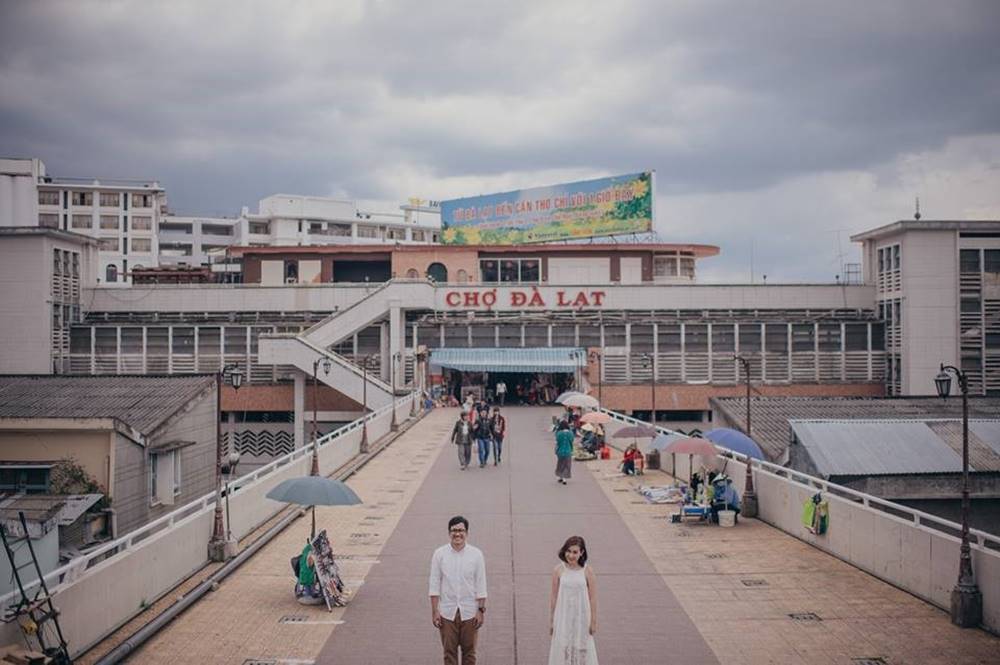
The cool climate helps explain the market’s food culture. Bánh tráng nướng — grilled rice paper with savoury toppings — and hot soy milk are two well-known evening choices, alongside other snacks that change by stall and season.
Come for food and people-watching rather than expecting a traditional wholesale market. If you want to understand Da Lat’s agricultural economy, vegetable, flower and farm visits outside the night market provide a different side of the city.
7. Ben Thanh Market — iconic, central and openly tourist-facing
Ben Thanh is probably Vietnam’s most recognisable urban market. Its central Ho Chi Minh City location and clock-tower façade make it an easy stop for first-time visitors, and the building remains a functioning market alongside its role as a major tourist landmark.
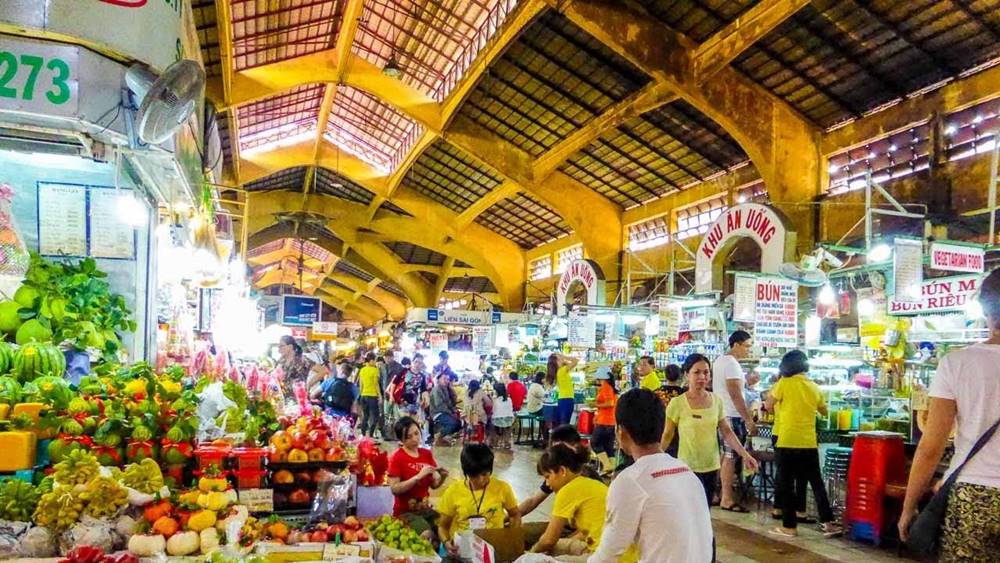
Expect a mixture of food, ingredients, clothing, coffee, dried products and tourist souvenirs. It is more visitor-oriented than Binh Tay Market, and that is not a reason to dismiss it: Ben Thanh is useful precisely because it shows how a historic city market has become part working commercial space, part landmark and part tourism economy.
Prices are not uniformly negotiable. Some stalls operate with fixed pricing while others bargain. Compare before buying and do not assume that aggressive haggling is required simply because you are in a market.
8. Binh Tay Market — Cho Lon’s wholesale side
Binh Tay Market in Cho Lon offers a different view of Ho Chi Minh City. Located in the city’s historic Chinese commercial district, it remains strongly associated with wholesale trade and the distribution of food, household goods, dried products and other merchandise.
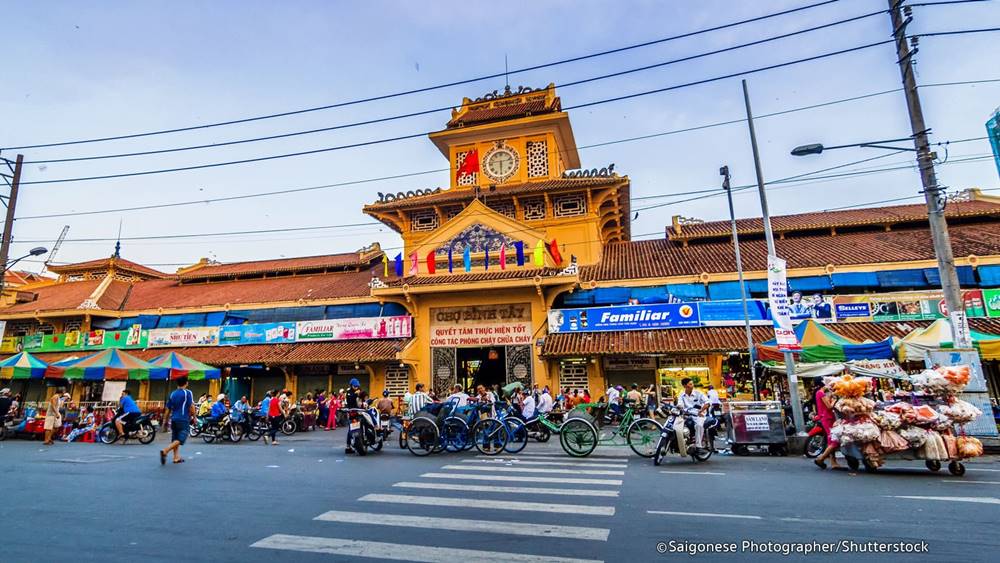
Come in the morning if you want to see more active commerce. The market’s architecture, central courtyard and surrounding Cho Lon streets make the visit worthwhile even if you are not planning to buy anything.
Binh Tay is often the more interesting choice for travellers who have already seen Ben Thanh and want to understand another layer of the city’s commercial history.
9. Cai Rang Floating Market — commerce shaped by the Mekong
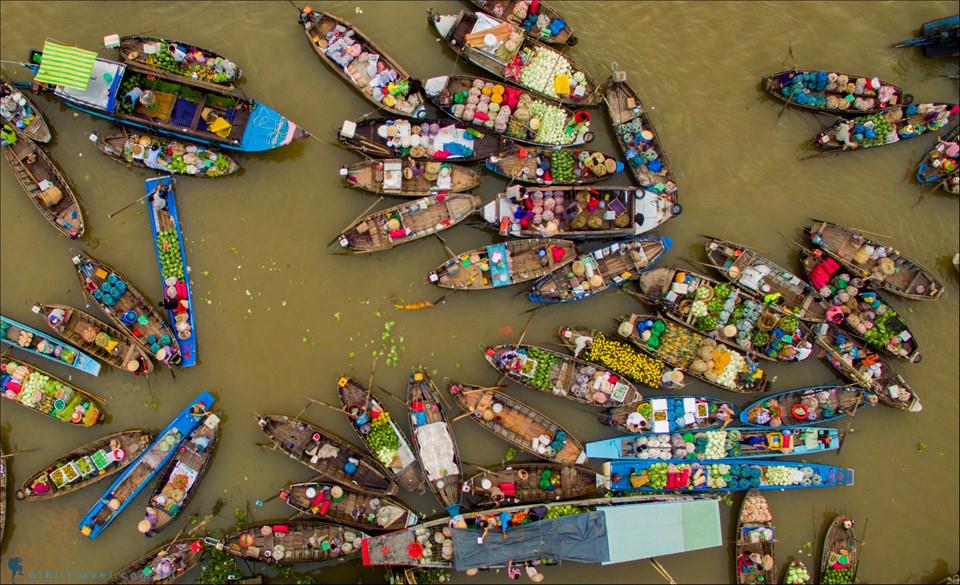
Cai Rang belongs in a national market guide because it represents a completely different commercial landscape. Near Can Tho, trading developed on the river, with boats carrying agricultural produce and smaller vessels providing food and other services.
The market is an early-morning experience. Vietnam Tourism and Can Tho tourism information both emphasise the morning trading period, with activity strongest around the first hours of daylight.
You may see the traditional cây bẹo system, where a sample of the product being sold is displayed on a tall pole so buyers on other boats can identify the cargo.
Expectations should still be realistic. Road transport and tourism have changed the scale and function of floating commerce over time. Visit it as part of the evolving river economy of the Mekong rather than as a reconstruction of how every delta market once operated.
10. Phu Quoc Night Market — seafood and an evening stroll in Duong Dong
Phu Quoc’s main night market is in central Duong Dong, around Bach Dang Street. Older guidebooks and articles may still refer to the Dinh Cau Night Market; the present Phu Quoc Night Market developed from the area’s earlier night-market arrangements and remains close to Dinh Cau.
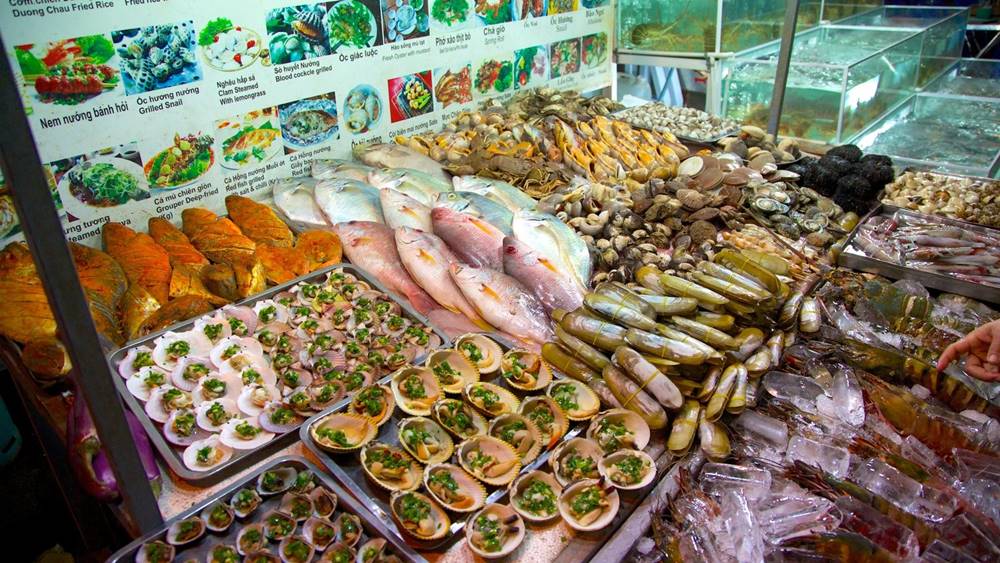
This is an evening food-and-shopping market rather than a working produce market. Seafood, snacks and Phu Quoc products are a large part of the experience, with souvenir stalls extending through the pedestrian area.
For seafood, check the displayed price, unit and weight before ordering rather than assuming every stall operates in exactly the same way. For pearls or other higher-value products, buy from a specialist retailer if certification and provenance matter to you.
Working market, night market or tourist market?
One reason travellers leave markets disappointed is that they expect every market to offer the same experience.
| If you want… | Consider… |
|---|---|
| A mountain weekly market | Bac Ha |
| A big-city working market | Dong Xuan, Dong Ba or Binh Tay |
| A pre-dawn wholesale experience | Quang Ba Flower Market |
| Street food after dark | Da Lat or Phu Quoc Night Market |
| A famous tourist landmark | Ben Thanh |
| A relaxed evening market | Hoi An Night Market |
| Mekong river culture | Cai Rang Floating Market |
How to visit Vietnamese markets respectfully
Markets are workplaces first. This is particularly important at wholesale markets and weekly mountain markets, where people are moving goods, animals, carts and vehicles through crowded spaces.
- Ask before taking a close portrait. Traditional clothing or a market stall is not automatic consent.
- Stay out of the working route. Do not block porters, vendors, vehicles or customers for a photograph.
- Do not touch food or merchandise without asking.
- Bargain only where bargaining is normal. Fixed-price signs should be respected.
- Keep cash in smaller denominations. Markets still often depend more on cash than international cards.
- Take normal care of your valuables. Crowded markets are not a reason for fear, but phones, wallets and open bags deserve attention.
For payment planning, see our Money in Vietnam: Cash, Cards, ATMs & Payments.
Should you visit a market with a guide?
You do not need a guide for every market. Dong Xuan, Ben Thanh, Hoi An Night Market and Phu Quoc Night Market are easy to explore independently.
A guide becomes more useful when context matters more than shopping: a weekly northern market, a wholesale market before dawn, a food-focused visit in Hue or a Mekong journey built around river life.
In these places, knowing what is being traded, why the market occurs on that particular day and how different communities use it can turn a visual stop into a more meaningful part of the route.
Frequently asked questions about markets in Vietnam
What is the most famous market in Vietnam?
Ben Thanh Market is probably the best-known internationally, while Dong Xuan is one of Hanoi’s best-known historic markets and Bac Ha is one of the most famous weekly mountain markets.
Which market is best for local food?
Dong Ba in Hue is particularly useful for understanding regional food, while Da Lat Night Market is strong for evening snacks. Food is also part of Dong Xuan, Bac Ha, Ben Thanh and Cai Rang, but each offers a different setting.
Do I need to bargain in Vietnamese markets?
Not everywhere. Some tourist-oriented stalls expect bargaining, while supermarkets, fixed-price stalls and many food vendors do not. Ask the price, compare where useful and negotiate politely only when the context is clearly flexible.
Are Vietnam’s markets safe?
They are ordinary public spaces used by large numbers of local people and visitors. In crowded markets, take normal precautions with phones, wallets and open bags, and stay aware of vehicles and working traffic.
What is the best market for photography?
Quang Ba before dawn, Bac Ha on market morning and Cai Rang around sunrise all offer visually interesting environments. The better photograph still depends on respecting people’s space and asking before taking close portraits.
Is Bac Ha Market still held on Sunday?
Yes, the main Bac Ha market continues to be held on Sunday. The dedicated buffalo market was moved to Saturday, so older guides that place the large buffalo-trading area inside the Sunday market are now outdated.
Is Cai Rang Floating Market still operating?
Yes. Trading patterns have changed as road transport has developed, but Cai Rang remains an active early-morning market and an important part of Can Tho’s river-tourism identity.
Choose the market that fits the route
You do not need to visit ten markets on one trip. One well-chosen market that fits naturally into the itinerary is more useful than adding market stops simply because they appear on a “must-see” list.
If you are in Hanoi, Dong Xuan or Quang Ba may already fit your day. In the mountains, let the weekly market calendar influence the route. In Hue, use Dong Ba to understand the city’s food. In the Mekong, wake early for a river market rather than treating it as an afternoon attraction.
On a private tailor-made journey, Tonkin Travel can build market days into the route according to the actual calendar, travel time and interests of the traveller rather than simply adding whichever market is closest.
Travel Guide
What clients say about us