Vietnam is easy to explore actively, but the best activity depends on where you go, when you travel and how demanding you want the day to be. From hiking and cycling in the northern mountains to kayaking in Lan Ha Bay, diving in the south, kitesurfing in Mui Ne and golf along the coast, outdoor experiences can be built naturally into a private Vietnam journey.
You do not need to plan an expedition to enjoy Vietnam outdoors. A gentle cycling ride through rice fields, a half-day hike, a kayak excursion or a morning on a golf course can be combined with food, culture and sightseeing. For more active travellers, longer mountain treks, canyoning and multi-day cycling routes can become a central part of the itinerary.
The guide below focuses on what you can do, where it makes sense and what to consider before adding it to your trip. Exact operating conditions, weather, water conditions, trail access and activity providers should always be confirmed for your travel dates.
At a glance: choose your activity
| Activity | Good places to consider | Typical level |
|---|---|---|
| Hiking & trekking | Sapa, Ha Giang, Cao Bang, Pu Luong, Ba Be, Phong Nha | Easy to demanding |
| Cycling | Ninh Binh, Mai Chau, Pu Luong, Hoi An, Mekong Delta | Easy to challenging |
| Kayaking / SUP | Lan Ha Bay, Ha Long Bay, coastal areas | Easy to moderate |
| Diving / snorkelling | Nha Trang, Phu Quoc and selected central-coast sites | Easy to advanced |
| Kitesurfing / wind sports | Mui Ne | Beginner to advanced |
| Golf | Da Nang, Hoi An, Nha Trang, Phu Quoc, Hanoi and other major destinations | All playing levels |
| Caving / adventure | Phong Nha–Ke Bang | Moderate to demanding |
1. Hiking and trekking in Vietnam
Northern Vietnam is the natural starting point for travellers who want to walk through mountain landscapes. Sapa, Ha Giang, Cao Bang, Ba Be, Mai Chau and Pu Luong each offer a different combination of terrain, villages, forests and agricultural landscapes.
A trek can be as gentle as a few hours through rice fields and villages or as demanding as a full-day mountain route. The distance alone does not tell you the difficulty: steep ascents, uneven paths, heat, humidity, mud and altitude can all change the experience.
Sapa and Fansipan
Sapa is a practical base for mountain walks around Muong Hoa Valley and neighbouring villages. Fansipan, Vietnam’s highest mountain, can be approached by trekking for experienced hikers or by cable car for travellers who mainly want the summit experience without a multi-day climb. If you want to trek, the route should be selected according to your experience, season and current trail conditions.
Ha Giang and Cao Bang
For a more remote mountain journey, Ha Giang combines roads, viewpoints, villages and walking opportunities. Cao Bang offers a different landscape around karst mountains, valleys and Ban Gioc Waterfall. These destinations are particularly suitable when you want outdoor activity to be part of a wider cultural journey rather than an isolated hiking holiday.
Pu Luong and Ba Be
Pu Luong is well suited to travellers who want a slower combination of walking, rice terraces and rural stays. Ba Be offers forest and lake landscapes, with hiking and boat-based exploration that can be combined in the same trip.
Good for: travellers who want landscapes and local life rather than a purely athletic challenge.
Plan for: heat, rain, uneven paths and seasonal trail conditions.
2. Cycling and mountain biking
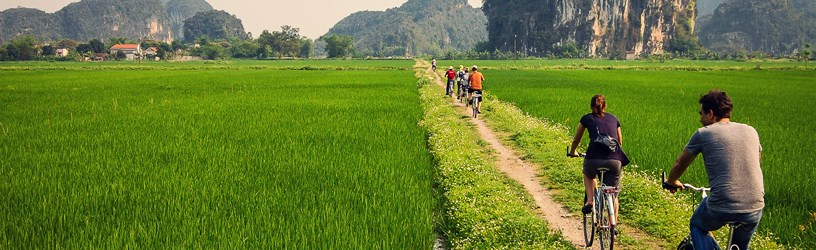
Cycling is one of the easiest ways to slow down and experience rural Vietnam. Instead of moving continuously between viewpoints by car, you can spend a few hours riding between villages, rice fields, waterways and small roads.
For a relatively gentle ride, consider Ninh Binh, Mai Chau, Hoi An or parts of the Mekong Delta. More demanding mountain biking is possible in northern Vietnam, where terrain and road conditions can become substantially more challenging.
The right route should be chosen around the cyclist rather than around a fixed kilometre target. Families, occasional cyclists and experienced riders can all enjoy Vietnam by bike, but they should not necessarily follow the same itinerary.
Good for: active travellers who want regular movement without committing to a long trek.
Plan for: traffic around towns, heat, road surfaces and elevation on mountain routes.
3. Kayaking and stand-up paddleboarding
Northern Vietnam’s limestone seascapes are particularly rewarding from the water. Lan Ha Bay, alongside the wider Ha Long Bay–Cat Ba Archipelago World Heritage property, offers opportunities to paddle between karst islands, beaches and sheltered areas.
Lan Ha Bay is often a good choice for travellers who want kayaking or SUP as part of an overnight cruise. Depending on the vessel and current regulations, excursions may include caves, lagoons, beaches or quieter sections of the bay.
In Ninh Binh, the classic experience is different: the Trang An Landscape Complex is explored primarily by small local boats through limestone formations and waterways. It is a scenic boat journey rather than a conventional kayaking trip.
Good for: travellers who want an active experience without a long hike.
Plan for: wind, tides, weather, operator rules and your own swimming ability.
4. Diving and snorkelling
Vietnam’s coastline provides several options for underwater activities, but conditions vary considerably by season and location. Nha Trang and Phu Quoc are among the most established bases for diving and snorkelling, while other central and southern coastal areas may also offer excursions depending on local operators and marine conditions.
Phu Quoc works particularly well for travellers who want to combine a beach stay with a half-day or full-day boat excursion. Nha Trang can suit travellers who want to add diving to a broader Central Vietnam itinerary.
If you are a certified diver, tell us your certification level and previous experience so the operator can propose an appropriate site. Beginners should use a recognised dive centre and complete the required introductory training rather than treating a snorkelling excursion as equivalent to scuba diving.
Good for: beach and marine-life enthusiasts.
Plan for: seasonal visibility, sea conditions, certification requirements and operator standards.
5. Kitesurfing and wind sports in Mui Ne
Mui Ne is one of Vietnam’s best-known destinations for kitesurfing and other wind-powered water sports. Vietnam Tourism highlights the area’s steady coastal winds and established schools, making it possible for beginners to take lessons as well as for experienced riders to continue practising.
The strongest and most reliable wind period is commonly associated with the cooler, drier months, particularly from roughly October to April, although actual conditions vary. If kitesurfing is the main reason for visiting, the itinerary should be built around the sport rather than treating it as a guaranteed activity on a random beach day.
Mui Ne also works for travellers who are not interested in getting on a board. The dunes, fishing harbour, beach and relaxed coastal atmosphere provide alternatives for companions travelling together.
Good for: travellers looking for a genuine water-sports focus.
Plan for: wind conditions, lessons, equipment and sea safety.
6. Golf in Vietnam
Golf has developed substantially in Vietnam, with courses now spread across several major tourism regions. Rather than relying on an old national course count, it is more useful to choose a course around your route and preferred playing experience.
Da Nang and the Central Coast are particularly convenient for combining golf with Hoi An and Hue. Nha Trang, Phu Quoc, Hanoi and other destinations also offer courses or golf clubs that can be incorporated when the itinerary and tee-time availability make sense.
For a golf-focused holiday, we can organise tee times and transfers around the courses you want to play. For a conventional Vietnam journey, one or two rounds can be added without allowing golf to dominate the itinerary.
Good for: travellers who want to combine sightseeing with selected rounds.
Plan for: tee-time availability, transfer times, weather and course dress / booking rules.
7. Caving and adventure in Phong Nha
Phong Nha–Ke Bang is the place to consider when your definition of outdoor activity goes beyond a scenic walk. The region is known for its extensive limestone cave systems and forested landscapes. Some experiences are accessible to ordinary visitors, while others require a higher level of fitness, specialist equipment, permits or organised expedition arrangements.
For a first visit, a cave excursion can be combined with cycling, river scenery or a national-park visit. More demanding multi-day cave expeditions should be treated as specialist adventure travel and planned separately.
Good for: adventurous travellers and nature enthusiasts.
Plan for: fitness, seasonal conditions, operator requirements and advance availability for specialist experiences.
8. Choose activities by region
Northern Vietnam
Choose the north for mountain trekking, cycling, rural walks, kayaking and nature-based activities. Sapa, Ha Giang, Cao Bang, Ba Be, Pu Luong, Ninh Binh and the Ha Long Bay–Cat Ba area can all fit active itineraries, but they offer very different levels of physical demand.
Central Vietnam
Central Vietnam works particularly well for a mixed itinerary: cycling around Hoi An, beach activities around Da Nang, golf on the Central Coast, hiking and cave experiences around Phong Nha, and selected water activities along the coast.
Southern Vietnam
The south is especially attractive for water-based activities. Mui Ne is associated with kitesurfing and wind sports, while Phu Quoc is convenient for snorkelling, diving, boating and beach activities. The Mekong Delta offers easier cycling and boat-based exploration rather than high-intensity adventure.
How difficult should your activity be?
The same destination can work for very different travellers if the activity is designed properly.
- Easy: countryside cycling, short village walks, gentle kayaking, boat excursions and beginner-friendly beach activities.
- Moderate: half-day mountain walks, longer cycling routes, multi-hour kayaking or introductory water sports.
- Demanding: steep mountain treks, technical cycling, long-distance hikes, specialist cave expeditions and intensive water sports.
Tell us your normal activity level rather than simply saying that you want an “adventure”. A traveller who runs regularly may want a very different itinerary from someone who walks several hours a day but rarely exercises at home.
When is the best time for outdoor activities?
There is no single best month for every outdoor activity in Vietnam because the country stretches from the subtropical north to the tropical south and has several different climate zones.
For northern trekking, cooler and drier periods can make mountain walking more comfortable, while summer can bring heat, humidity and heavy rain. Central Vietnam has its own seasonal rainfall pattern, and coastal water activities depend strongly on sea conditions. In southern Vietnam, the timing of dry and wet seasons affects beach and boat activities, while Mui Ne’s wind season is particularly relevant for kitesurfing.
If one activity is essential to your trip – for example kitesurfing, diving or a multi-day trek – tell us first. We can then work backwards from the conditions that activity needs rather than adding it after the rest of the itinerary has already been fixed.
Outdoor activities and a private Vietnam journey
The advantage of a private journey is that outdoor activities do not have to become an all-or-nothing choice. You can spend two days trekking in the north, slow down with a cultural visit, cycle through the countryside around Hoi An and finish with a few days by the sea.
We can also build the itinerary around different interests within the same group. One traveller can hike while another follows a shorter route; one person can dive while the other enjoys a beach or spa day; golfers can play a round while companions explore the surrounding area.
That flexibility is often more useful than trying to find one “best” sports destination in Vietnam.
A few practical points before you book
- Tell us your real experience level, especially for trekking, cycling, diving and water sports.
- Allow flexibility for weather and sea conditions. Outdoor activities cannot always be guaranteed on a particular day.
- For specialist activities, use an appropriate local operator and follow current safety requirements.
- For mountain routes, good footwear, sun protection, water and appropriate clothing matter more than simply increasing the planned distance.
- For diving and water sports, disclose relevant medical or certification information to the operator when required.
- Build recovery time into an active itinerary. A private trip does not need to fill every day with activities.
Frequently asked questions
Is Vietnam good for adventure travel?
Yes, particularly if you combine several regions. Northern Vietnam is strong for trekking and cycling, the central region offers caves, cycling and coastal activities, and the south has established options for diving, snorkelling and kitesurfing. The right choice depends on the level of challenge you want.
Can beginners hike or kayak in Vietnam?
Yes. Many activities can be adapted for beginners, but not every trail or water route is suitable for a first-timer. We recommend choosing the destination and route around your actual experience rather than assuming every outdoor activity is beginner-friendly.
Where should I go in Vietnam for kitesurfing?
Mui Ne is the most established choice, with a strong watersports scene and schools offering lessons for different levels. Wind conditions are seasonal, so the timing of your trip matters.
Where can I combine golf with sightseeing?
Da Nang and Hoi An are particularly convenient because golf can be combined with Central Vietnam’s cultural and coastal attractions. Other golf destinations can be incorporated around Hanoi, Nha Trang and Phu Quoc depending on the course and tee-time availability.
Can outdoor activities be added to a classic Vietnam tour?
Absolutely. A private itinerary can include one or two active experiences without turning the entire journey into an adventure trip. The most important thing is to leave enough time for transfers and recovery between more demanding activities.
Tell us what you would like to do – hiking, cycling, kayaking, diving, kitesurfing, golf or something more specialised – and we can build the activity around the rest of your Vietnam journey.
Travel Guide
What clients say about us