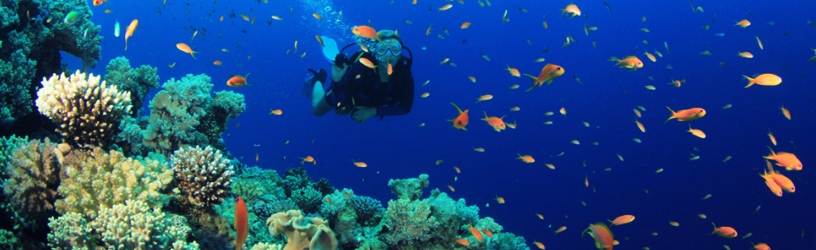
Vietnam is not usually the first country experienced divers mention when discussing Southeast Asia, but its long coastline and very different marine regions make scuba diving an interesting addition to a wider Vietnam journey. From Nha Trang and the islands off Hoi An to Phu Quoc and Con Dao, the experience changes considerably according to season, sea conditions, diver level and the kind of holiday you are planning.
The key is not simply to search for a list of famous dive sites. Some names found in older Vietnam diving guides are no longer useful as fixed recommendations because reef condition, conservation measures, access and operator routes can change. It is better to choose the right region first, then confirm the most appropriate sites with a professional dive operator close to the travel date.
For most travellers, Vietnam’s most useful diving areas are Nha Trang, Cu Lao Cham near Hoi An, Phu Quoc and Con Dao. Vinh Hy Bay is also worth considering, particularly for travellers who are more interested in snorkelling and shallow coral exploration than in organising a dedicated scuba-diving stay.
Where should you dive in Vietnam?
| Destination | Best for | Useful period | Level | Main consideration |
|---|---|---|---|---|
| Nha Trang | Easy access, introductory dives, reef and macro diving | Generally more favourable from late winter through summer | Beginner to experienced | Reef condition and visibility vary between sites |
| Cu Lao Cham | Adding diving to a Hoi An stay | Approximately March – September | Beginners, snorkellers and certified divers | Highly seasonal boat access |
| Phu Quoc | A resort holiday with snorkelling or diving | Generally strongest during the drier season | Very accessible to beginners | Visibility can be modest compared with major Asian dive destinations |
| Con Dao | Marine nature and a quieter island stay | Approximately April – October | Beginner to experienced depending on site | Worth allowing several nights rather than visiting only for one dive |
| Vinh Hy | Snorkelling and accessible coral viewing | Best when local sea conditions are calm | Beginners and snorkellers | Better considered a marine excursion than a major scuba base |
Quick choice: Nha Trang is the easiest all-round diving base; Cu Lao Cham fits naturally into a Hoi An stay; Phu Quoc works particularly well when diving is secondary to a beach holiday; and Con Dao is the strongest choice for travellers who want several days in a quieter marine environment.
1. Nha Trang: Vietnam’s most established diving base
Nha Trang has long been one of Vietnam’s principal centres for recreational scuba diving. Its greatest advantage is convenience. Travellers can stay in a full-service coastal city, enjoy the beach and cultural visits, and add a diving day without restructuring the rest of their Vietnam itinerary.
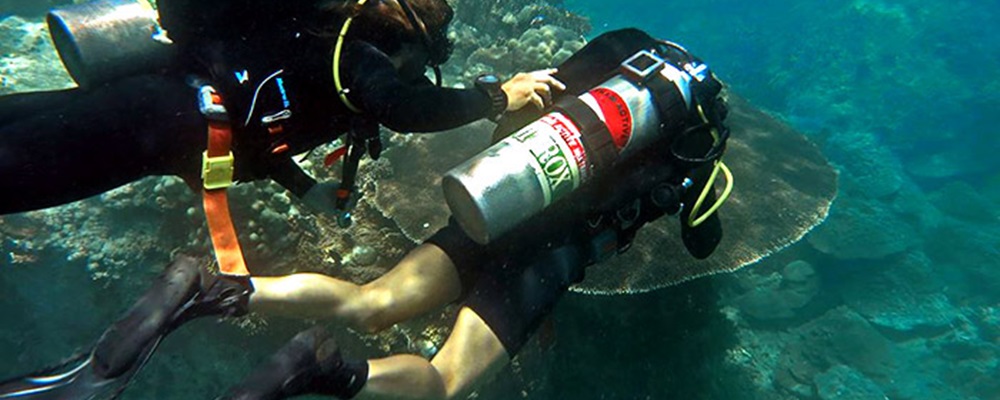
The marine areas around Nha Trang include coral reefs, rocky formations, sandy bottoms and a variety of shallow and deeper sites. The destination is particularly practical for travellers trying scuba diving for the first time, but experienced recreational divers can also find more challenging dives depending on conditions and current access.
Moray Beach and the Hon Mun area
Moray Beach remains one of the names most closely associated with diving around Nha Trang. Its relatively accessible depth has made it useful for training and recreational dives, with coral formations and smaller marine species providing much of the interest.
The wider Hon Mun marine area has long played an important role in Nha Trang’s underwater tourism and marine conservation. Environmental monitoring, coral restoration and protected-area management mean that access to specific zones can change.
For this reason, a list of dive-site names should not be treated as a guaranteed programme. The day’s location should be chosen according to current regulations, visibility, sea conditions and the experience of the divers.
What about Madonna Rock, Ho Trau Nam and White Rock?
These names appear frequently in older Nha Trang diving material and may still be used by individual operators. Historically they have been associated with caverns, deeper reef formations, soft corals and more advanced diving.
However, we would not build an itinerary around a promise to dive one particular site months in advance. Site access and naming can vary, and a professional dive centre should be free to choose a safer or more rewarding location on the day.
The same applies to wildlife. Moray eels, nudibranchs, reef fish, rays and many other species may be encountered, but individual sightings cannot be guaranteed.
If Nha Trang is part of your wider trip, our updated Nha Trang travel guide explains how to combine the bay, islands, beach and cultural visits.
2. Cu Lao Cham: the natural diving extension from Hoi An
Older travel guides often describe this simply as “diving in Hoi An”. More precisely, the marine experience takes place around Cu Lao Cham, the island group offshore from Hoi An.
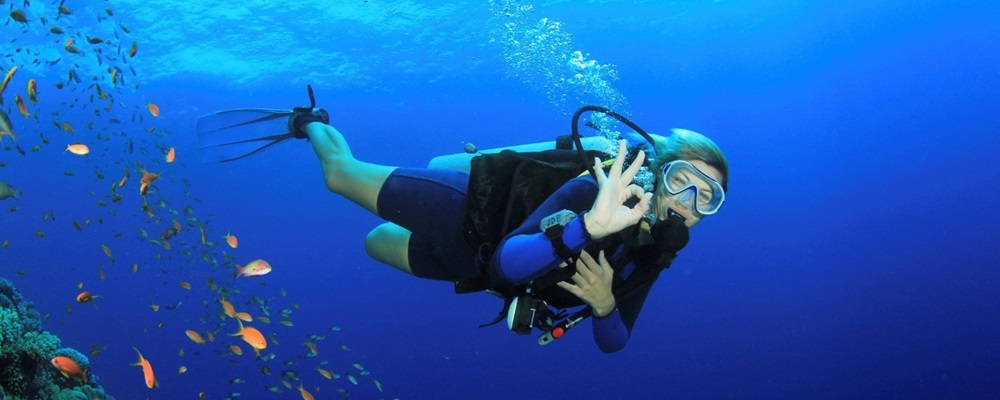
Cu Lao Cham forms part of the Cu Lao Cham-Hoi An World Biosphere Reserve. The waters around the islands contain coral habitats and support both snorkelling and scuba-diving activities within regulated marine areas.
Its principal advantage is itinerary logic. Travellers already spending several nights in Hoi An can add a marine day without requiring another domestic flight or a separate beach resort stay.
Hon Nhan, Hon Mo and today’s operating sites
Hon Nhan and Hon Mo are among the names found in established diving descriptions of the archipelago. Depending on the site, the underwater environment can include rocky formations, reef sections, hard and soft coral and smaller marine species.
Current tourism and conservation management also refers to areas such as Hon Dai, Hon Tai and Bai Xep. Rather than selecting an excursion because of one historic dive-site name, it is more useful to confirm which authorised areas are providing the best conditions close to the actual travel date.
When should you dive at Cu Lao Cham?
The practical marine-tourism period is generally around March to September, with summer often providing more settled conditions. During the rougher autumn and winter period, boat services can be disrupted or suspended.
This makes Cu Lao Cham a good example of an activity that should remain weather-dependent. Outside the normal operating season, we would not force diving into the itinerary simply because it appeared in an original programme.
3. Phu Quoc: diving as part of a tropical beach holiday
Phu Quoc is especially convenient when scuba diving or snorkelling is important but not the main reason for the trip. The island has a large choice of resorts, direct air connections and numerous boat excursions, making it easy to devote one day to the underwater world and the rest of the stay to relaxation.
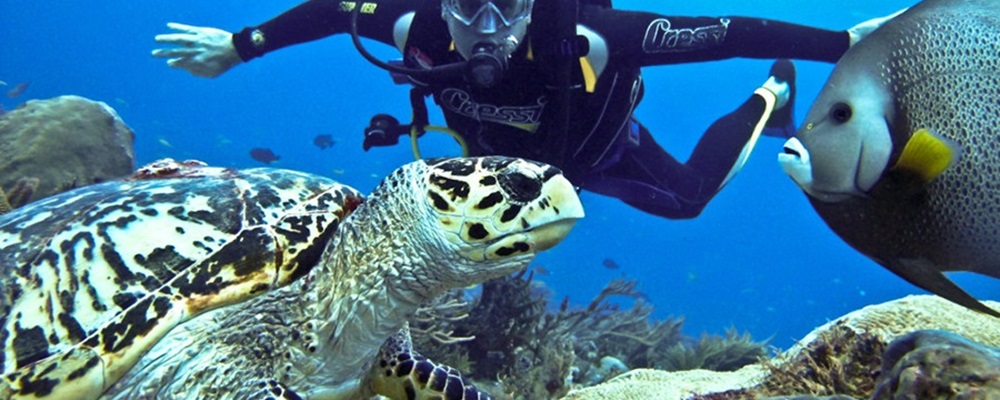
Historically, sites such as Dry Island (Hon Ko) and Nudibranch Gardens have appeared prominently in Phu Quoc diving guides. Today, many visitor excursions also focus on the islands of the An Thoi archipelago south of Phu Quoc.
South Phu Quoc and the An Thoi islands
Areas around islands such as Gam Ghi, Mong Tay and May Rut are regularly used for coral and marine excursions. Many reef areas are relatively shallow, which is one reason southern Phu Quoc is particularly accessible for snorkellers and travellers trying underwater activities for the first time.
What should experienced divers expect?
Phu Quoc can provide enjoyable recreational diving, but it is better known for accessible coral excursions than for consistently deep visibility, dramatic walls or major pelagic encounters.
That is not necessarily a disadvantage. For a couple or family where only one person wants to dive, Phu Quoc is one of the easiest destinations in Vietnam because the rest of the group has plenty of alternatives.
Weather matters. The drier period generally offers more reliable conditions, while monsoon weather can affect waves, boat operations and underwater visibility.
If diving is only one factor in choosing your beach destination, see our Phu Quoc vs Nha Trang vs Mui Ne vs Con Dao comparison.
4. Con Dao: diving within a protected island environment
For travellers whose priority is the natural marine environment rather than nightlife or a large resort scene, Con Dao is one of Vietnam’s most compelling diving destinations.
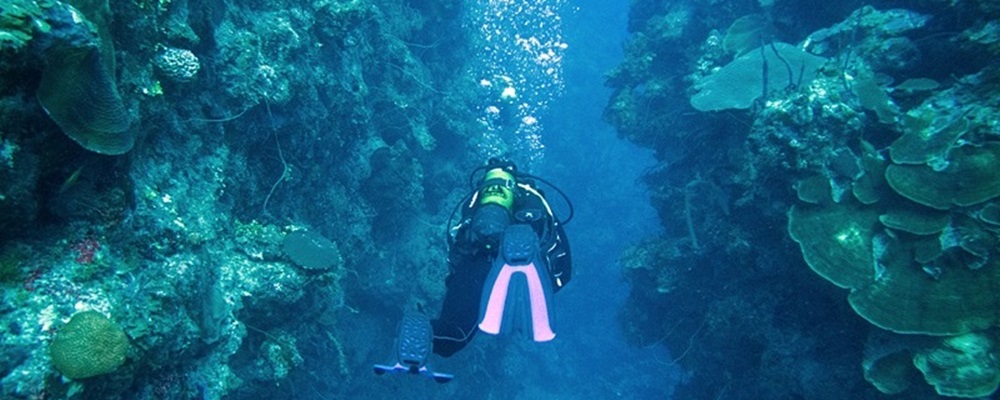
The Con Dao archipelago is closely connected to Con Dao National Park, with coral reefs, seagrass habitats and important sea-turtle conservation areas forming part of a broader protected ecosystem.
Older versions of this article referred to around twenty dive sites and described a particular wreck as “the only dive-able wreck in Vietnam”. We would no longer use such a claim as a reason to choose the destination. The stronger and more reliable attraction is Con Dao’s overall marine environment.
Where does diving take place?
Areas around Bay Canh Island, Tai Island, Cau Island and Dam Tre Bay are among the locations associated with marine exploration around the archipelago. The day’s actual site should depend on currents, wind, visibility, diver ability and national-park regulations.
When is the best period for Con Dao?
Roughly April to October generally provides more favourable conditions for marine activities. Individual days can still vary, particularly because currents and wind affect different sides of the islands differently.
How long should you stay?
Con Dao deserves more than a quick in-and-out dive excursion. If diving is important, allow several nights so that one poor-weather day does not determine the entire experience.
It also works well for travellers who appreciate quiet beaches, protected nature and historical sites, making the island worthwhile even when diving conditions are not perfect.
5. Vinh Hy Bay: better for accessible coral exploration
Vinh Hy Bay is sometimes included in lists of Vietnam’s top diving destinations, but its attraction for most travellers is slightly different.
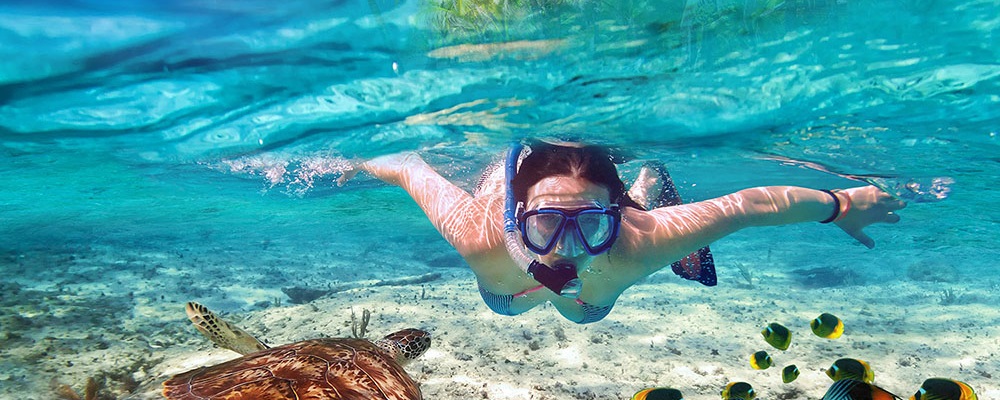
Vinh Hy lies beside the dramatic coastal landscape of Nui Chua National Park. Shallow coral areas make snorkelling, boat excursions and coral viewing relatively accessible, including for travellers who do not want to commit to a full scuba-diving programme.
For this reason, we consider Vinh Hy particularly appropriate for:
- snorkellers;
- families interested in marine life;
- travellers exploring the south-central coast;
- people who want coral viewing without making diving the focus of the trip.
Older descriptions place Vinh Hy in Ninh Thuan Province. Since Vietnam’s administrative reorganisation took effect on 1 July 2025, the former Ninh Thuan and Khanh Hoa provinces form the enlarged Khanh Hoa Province. “Ninh Thuan” nevertheless remains useful as a historic and geographical reference when reading older travel material.
For more context about this coastline, see our Vinh Hy Bay guide.
Which Vietnam diving destination is right for you?
| Your priority | Best fit | Why |
|---|---|---|
| Trying scuba diving for the first time | Nha Trang | Established dive infrastructure and accessible sites |
| Several dedicated dive days | Con Dao | Diving fits naturally into a protected island stay |
| Resort holiday plus one underwater day | Phu Quoc | Very easy to combine diving with beach relaxation |
| Already spending several nights in Hoi An | Cu Lao Cham | No need to redesign the wider route |
| Primarily snorkelling and coral viewing | Vinh Hy or Phu Quoc | Easy shallow-water marine excursions |
| One traveller dives and the other does not | Nha Trang or Phu Quoc | Plenty of non-diving activities for companions |
When is the best time for scuba diving in Vietnam?
Vietnam does not have one national diving season. Its long coastline is affected by different monsoon patterns, so the best destination changes according to the month of travel.
| Destination | Useful planning period | Main variables |
|---|---|---|
| Nha Trang | Late winter through summer is generally more favourable | Rain, wind, visibility and local site restrictions |
| Cu Lao Cham | Approximately March – September | Autumn and winter sea conditions can stop boat services |
| Phu Quoc | Generally the drier part of the year | Monsoon weather, waves and visibility |
| Con Dao | Approximately April – October | Wind, currents and local marine conditions |
The useful rule is simple: choose the diving area according to the travel month, not the other way around. There is little value in adding a major detour to reach a famous site during an unreliable marine season.
Scuba diving or snorkelling?
Vietnam travel programmes sometimes use the words “diving” and “snorkelling” too loosely. They are different activities and should be planned differently.
| Activity | Best for | What to know |
|---|---|---|
| Snorkelling | Casual coral and fish viewing | No scuba certification; experience depends heavily on shallow-reef condition and visibility |
| Introductory scuba | Beginners wanting to try scuba | Requires professional instruction and close supervision |
| Certified recreational diving | Qualified divers | Site, depth and conditions should match certification and recent experience |
If underwater activities are important to your journey, tell us whether you mean casual snorkelling, a first scuba experience or diving as an already-certified diver. That distinction can change both the destination and the type of operator required.
What certified divers should tell us
For a certified diver, useful planning information includes:
- your certification level;
- approximately how many dives you have completed;
- the date of your most recent dive;
- whether you are comfortable with current, deeper water or lower visibility;
- whether you require rental equipment;
- whether other members of the party will snorkel or remain on land.
A professional dive operation may recommend a refresher, additional supervision or another site depending on recent experience and local conditions.
Marine wildlife: keep expectations realistic
Older diving articles frequently describe particular sites by listing rays, sharks, turtles, whale sharks, seahorses or other species as though they were part of the itinerary.
Marine wildlife does not work that way. Many species occur in Vietnamese waters and memorable encounters are possible, but no responsible operator should guarantee a particular wild animal.
Choose the destination for the quality of the overall marine experience, not because an old article promises one species at one site.
Diving responsibly in Vietnam
Vietnam’s coral ecosystems are attractive tourism resources but also vulnerable habitats. Responsible behaviour underwater matters.
- Do not stand on, touch or collect coral.
- Maintain appropriate buoyancy and keep fins away from the reef.
- Do not chase, feed or handle marine animals.
- Respect protected-area rules and temporary closures.
- Accept a change of dive site when weather or conservation conditions require it.
Marine conservation work around places such as Hon Mun and Cu Lao Cham is also a reminder that the most famous dive site is not necessarily the site that should be visited on every day of the year.
How diving fits into a private Vietnam itinerary
For most Tonkin Travel clients, scuba diving is one component of a broader journey through Vietnam. Route logic therefore matters as much as the reputation of an individual dive site.
| If your itinerary includes… | Most logical marine option |
|---|---|
| Dalat and the south-central coast | Nha Trang — easy highland-to-coast transition |
| Several nights in Hoi An | Cu Lao Cham — seasonal day excursion |
| Ho Chi Minh City followed by a resort stay | Phu Quoc — easy beach-and-dive combination |
| Southern Vietnam plus several quiet island nights | Con Dao — stronger nature-focused extension |
| Nha Trang / Cam Ranh and the Nui Chua coast | Vinh Hy — easy snorkelling and coral exploration |
For example, our Vietnam Timeless Memory – 18 Days includes three nights in Nha Trang after Dalat, leaving enough free time for travellers who wish to consider a diving day according to conditions.
For a different style of journey, our Luxury Vietnam programme includes a longer stay in Con Dao, making the island a more natural choice when travellers want to combine relaxation with marine activities.
Other active options can be found in our Sports & Activities in Vietnam guide.
Frequently asked questions about scuba diving in Vietnam
Is Vietnam good for scuba diving?
Yes, particularly when diving is combined with a broader Vietnam journey. The country offers accessible tropical reef diving, although travellers should not expect every site to provide the visibility, pelagic life or dramatic underwater topography of Asia’s best-known dedicated diving destinations.
What is the best place to dive in Vietnam?
There is no single winner. Nha Trang is the easiest all-round base, Con Dao is particularly attractive for a nature-focused island stay, Phu Quoc is convenient for a resort holiday, and Cu Lao Cham is the most logical choice when you are already visiting Hoi An.
Where should beginners dive?
Nha Trang is usually the most straightforward choice because it has a long-established diving industry and accessible training sites. Phu Quoc can also work well for an introductory scuba experience during a beach holiday.
Do I need a scuba certification?
Not for snorkelling. Beginners may also be able to join professionally supervised introductory scuba experiences. Certified recreational diving requires the appropriate qualification for the site, depth and conditions involved.
Can I dive in Nha Trang all year?
Dive operations may be available over a long season, but conditions are not equally good throughout the year. Late winter through summer is generally more favourable, while wetter and rougher weather later in the year can affect visibility and site choice.
When is the best time to dive in Con Dao?
Approximately April to October generally provides more favourable marine conditions, although wind and currents still vary from one day and one side of the archipelago to another.
Is Phu Quoc better for snorkelling or scuba diving?
Phu Quoc is particularly easy for snorkelling because many coral areas are relatively shallow. Scuba diving is available as well, but experienced divers should discuss current visibility and site selection with the operator before setting expectations.
Can I dive at Cu Lao Cham from Hoi An?
Yes, during the normal marine-tourism season. Boat excursions operate from the Hoi An coast, but rough weather outside the main season can disrupt or stop services.
Can I see turtles, manta rays or whale sharks?
Such animals occur in the wider region, but sightings cannot responsibly be guaranteed. Photographs and older dive reports should be treated as examples of possible encounters rather than promises of what a particular dive will deliver.
How many days should I allow for diving?
One diving day can fit naturally into Nha Trang, Phu Quoc or a seasonal Hoi An stay. If diving is one of your main reasons for visiting Con Dao, several nights are preferable so that poor weather on a single day does not determine the whole experience.
Vietnam is most rewarding for divers when the underwater experience fits naturally into the rest of the journey. Choose the region according to the season, match the dive to your experience level, keep individual site selection flexible and regard wildlife encounters as a possibility rather than a promise.
Travel Guide
What clients say about us